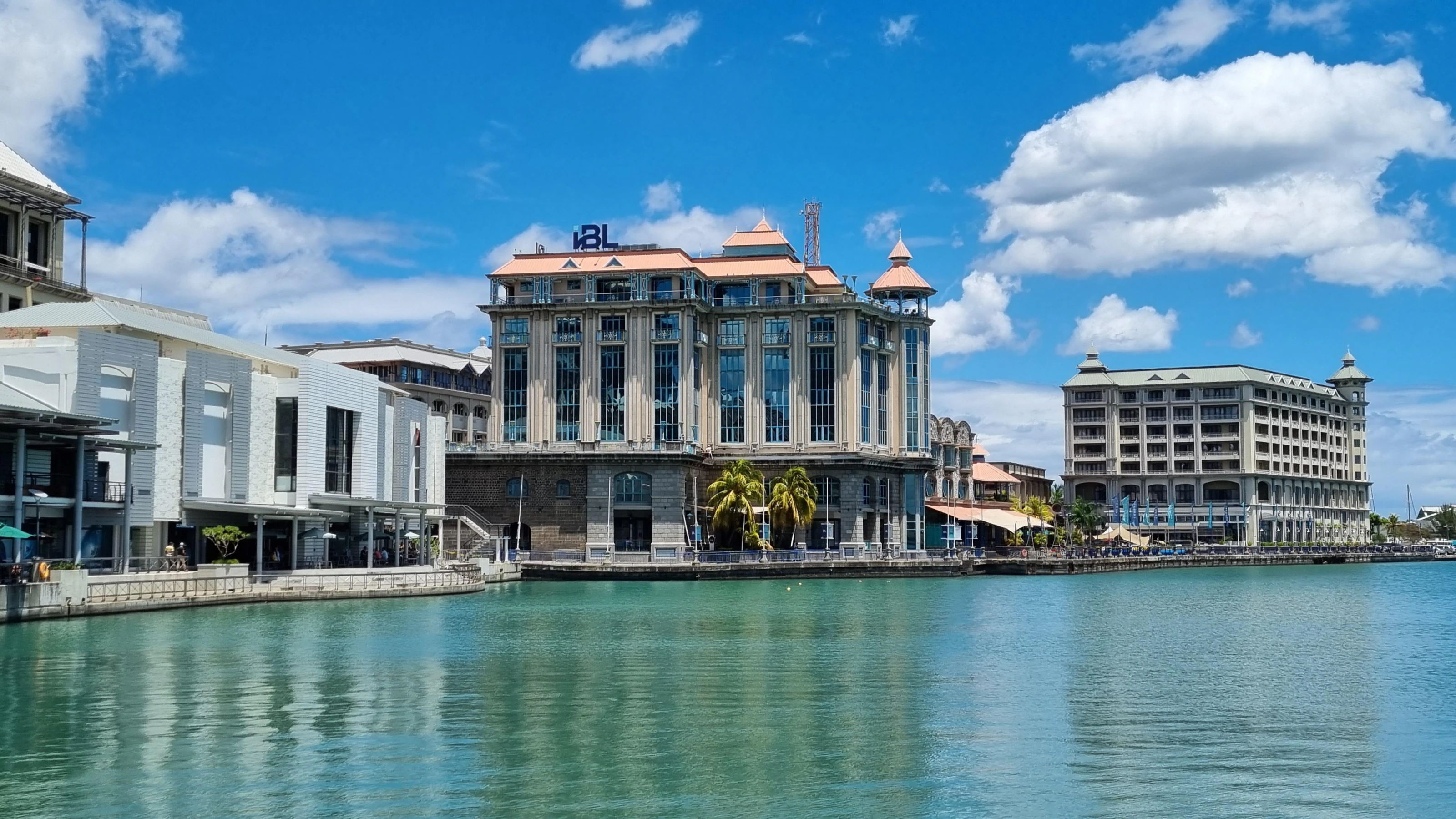
Mauritius at a glance
Tax, the legal framework, regulation and common questions about relocating to Mauritius.
In figures
- 0% on capital gains when you sell shares, bonds or funds
- 0% on wealth and inheritance no tax on what you own, give or pass on
Tax and residency
Tax
- 1
Capital gains
0% when you sell securities
An individual who sells shares, bonds or funds pays no tax on the gain.
- 2
Wealth and inheritance
No tax on wealth, inheritances or gifts
No annual tax on what you own, no tax on inheritances or gifts. Where Mauritian law applies to the succession, the Civil Code, as in France, reserves a share for the children.
- 3
Foreign income
Taxed only if received or used in Mauritius
Interest, dividends, rent, pensions and salaries earned abroad are taxed only when brought to or used in Mauritius. Your savings and your capital gains can be brought in without tax.
- 4
Tax treaties
45 treaties in force
A treaty between two countries exists to stop the same income being taxed twice. Mauritius has them with France, Belgium, Luxembourg, Monaco, the United Kingdom, Germany, Italy, the United Arab Emirates, Singapore, South Africa, etc. See all 45
Residence and institutions
- 5
Residence
Four ways to obtain a permit
An investment (from USD 100,000), a job, retirement from age 50, or a property purchase from USD 375,000. Details below
- 6
Legal framework
French Civil Code and British common law
Mauritian law comes from both traditions. Contracts can be written in French or English.
- 7
Regulation
Regulated banks and wealth managers
Banks are regulated by the Bank of Mauritius, wealth managers by the Financial Services Commission, which licenses Necker Finance.
- 8
Transparency
Automatic exchange of information since 2018
Each year Mauritius sends other countries the details of accounts held by their residents (the CRS standard). As at September 2026 it is on no FATF or European Union list.
Sources
- Mauritius Revenue Authority, communiqué on the taxation of gains from securities
- PwC, Worldwide Tax Summaries, Mauritius, individuals
- Mauritius Revenue Authority, foreign income
- Mauritius Revenue Authority, tax treaties in force
- Economic Development Board, residency in Mauritius
- Mauritius International Financial Centre, the legal system
- Financial Services Commission
- Mauritius Revenue Authority, Common Reporting Standard
Common questions
Last updated: September 2026
01 Does a residence permit make me tax resident in Mauritius? +
No. You are tax resident if you are domiciled in Mauritius with no permanent home elsewhere, if you spend at least 183 days there in the income year (1 July to 30 June), or 270 days over that year and the two before it. If your home country also treats you as resident, the tax treaty between the two countries decides. Mauritius has 45 treaties in force, including with France, Belgium, Luxembourg and Monaco. There is none with Switzerland, so each country then applies its own rules.
02 What are the income tax rates in Mauritius? +
For the income year from 1 July 2026 to 30 June 2027, an individual pays, on chargeable income, 0% on the first MUR 500,000, 10% on the next MUR 500,000, 20% on the next MUR 11 million and 35% above that. Dividends from a company resident in Mauritius and interest on savings or fixed deposit accounts with a bank or licensed deposit-taking institution are exempt. There is no separate capital gains tax.
See the official sources
03 Is my foreign income taxed in Mauritius? +
Only if it is received or used there. A resident individual is taxed on foreign income only when it is received in Mauritius or used there in their interest. Income that stays abroad is not taxed in Mauritius. The source country sometimes keeps the right to tax: rent from a property in France stays taxed in France, as do French statutory basic and compulsory supplementary pensions (AGIRC-ARRCO). Where there is one, the tax treaty between the two countries prevents double taxation.
04 Must I move my bank accounts and portfolios to Mauritius? +
No. You can keep your bank accounts and portfolios with your existing institutions. You need to tell each bank about your new tax residence; some ask for updated documents or review the relationship under their own rules. Necker Finance manages assets held with custodian banks around the world or advises you on their management, without moving them. Certain permits (investor, retiree) and property purchases do require specific transfers into Mauritius.
See the official sources
05 Does Mauritius meet international standards of financial transparency? +
Yes. Banks are regulated by the Bank of Mauritius, and non-bank financial services, including wealth management, by the Financial Services Commission. Mauritius applies the international standards of financial transparency, including the Common Reporting Standard (CRS), the automatic exchange of information, since 2018. As at September 2026 it is on no FATF or European Union list, whether for money laundering or for tax.
See the official sources
- Financial Services Commission
- Bank of Mauritius, role and functions
- MRA, Common Reporting Standard
- OECD, peer review of automatic exchange of information, 2022
- FATF, plenary outcomes, October 2021
- FATF, jurisdictions under increased monitoring, June 2026
- FATF, high-risk jurisdictions subject to a call for action, June 2026
- Commission Delegated Regulation (EU) 2022/229
- Council of the EU, list of non-cooperative jurisdictions for tax purposes, February 2026
06 Which permits allow me to settle in Mauritius? +
As at September 2026, the Occupation Permit covers three profiles: the investor (initial investment of USD 100,000), the professional (basic salary of at least MUR 50,000 a month) and the self-employed person working alone in a service activity, consulting or IT for example (initial investment of USD 50,000). The retired non-citizen permit is for people aged 50 or over who transfer USD 2,000 a month or USD 24,000 a year. These permits run for up to ten years (for the professional, no longer than the employment contract). Buying an eligible property is another route (see below). Spouses, parents and children up to 24 can apply for their own dependant permit.
07 Can a foreigner buy property in Mauritius? +
Yes. With the Economic Development Board’s approval, a non-citizen may buy in the IRS, RES, PDS and Smart City schemes, a hotel unit (IHS), or an apartment in a building of at least two floors above the ground floor, from MUR 6 million. Registration duty payable by the buyer is 5%. From USD 375,000, an eligible purchase entitles you to apply for a residence permit, valid for as long as you hold the property. Below that amount, buying does not, by itself, bring residence.
This information is general and is not personalised tax, legal, banking or property advice. The applicable rules depend on each situation and may change.

The first step
Your situation
Let’s talk, in French or in English.