Analysis Article
Can AI predict financial markets?
Machine intelligence can widen the field of vision. Objectives, context and accountability still belong to people.
Artificial intelligence is becoming remarkably capable at finding patterns, summarising information and testing scenarios. That does not make it an oracle. Markets are adaptive systems: the relationships within them change as policy, behaviour, liquidity and expectations change.
The more useful question is therefore not whether a machine can know what comes next. It is where machine intelligence can improve an investment process, and where judgement remains irreducibly human.
Prediction is not the same as preparation
A forecast compresses many possible futures into one view. A resilient portfolio does something different: it acknowledges that more than one future can arrive.
Models can estimate probabilities from the information available to them. They can compare regimes, detect anomalies and update faster than any individual analyst. But every output still rests on choices: which data matters, which history is relevant, which constraints apply and what failure would mean.
The strongest use of AI is not certainty. It is a wider field of vision, examined with discipline.
Where machine intelligence earns its place
Used well, AI can make the analytical process broader and more consistent. It can help teams:
- organise large volumes of market and company information;
- surface relationships that deserve further investigation;
- test how assumptions behave across different scenarios;
- monitor portfolios and identify changes that merit attention.
These are meaningful advantages. They improve the questions available to an investment team. They do not remove the need to decide which questions matter.
The part no model can own
An investment decision exists inside a human context. Time horizon, liquidity needs, tax residence, family responsibilities, concentration risk and the capacity to absorb loss can all change what a sensible decision looks like.
A model does not know why the capital matters. It cannot determine which trade-off a client should accept, explain that trade-off in a relationship of trust or carry responsibility for the outcome. Those are not gaps waiting for a larger dataset; they are part of the mandate itself.
A better combination
The productive future is not machine versus adviser. It is a clearer division of labour.
Technology can widen the evidence set, challenge assumptions and support continuous monitoring. People frame the objective, test whether the result makes sense, judge what is appropriate and remain accountable for the decision.
For investors, that leads to a more useful set of questions than “What will the market do next?”:
- What assumptions does the portfolio depend on?
- What could make those assumptions fail?
- Which risks are rewarded, and which are simply concentrated?
- What must remain true for the plan to serve its purpose?
AI can help explore the answers. Discipline is what turns them into an investment process.
Further reading
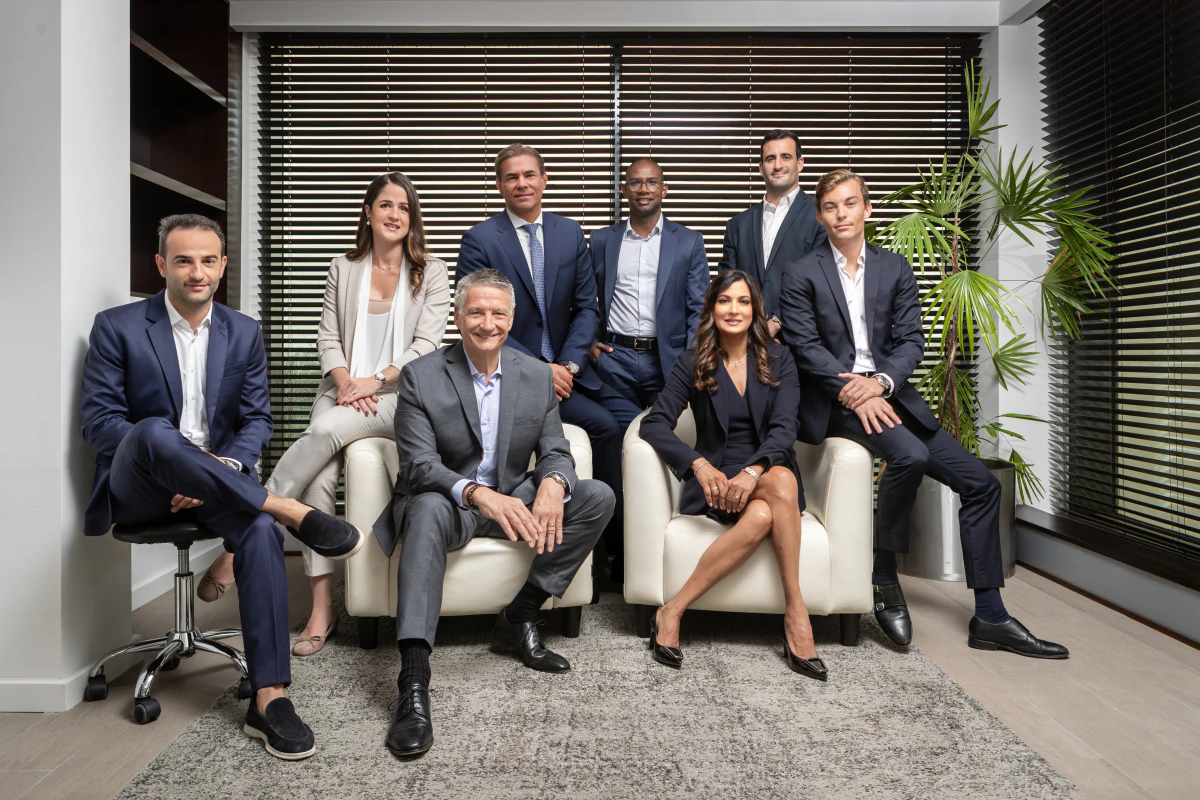
Lac Leman joins Necker Finance Mauritius
Necker Finance Mauritius now holds the entire share capital of Lac Leman Investment Management Ltd, completing a step that began with a minority interest a year earlier.

Guillaume Passebecq appointed CEO of Necker Finance Mauritius
Necker Finance Mauritius appoints Guillaume Passebecq, a private banking leader with more than thirty years of experience, as Chief Executive Officer.