Analysis Market note
Precious metals: what lies beneath the volatility
Gold does not always behave like a safe haven in the first phase of a geopolitical shock. What matters more is what happens underneath the volatility.
One nuance behind the chart is easy to miss: gold does not always behave like a safe haven in the first phase of a geopolitical shock.
Liquidity, positioning and real yields can matter more than the headline itself.
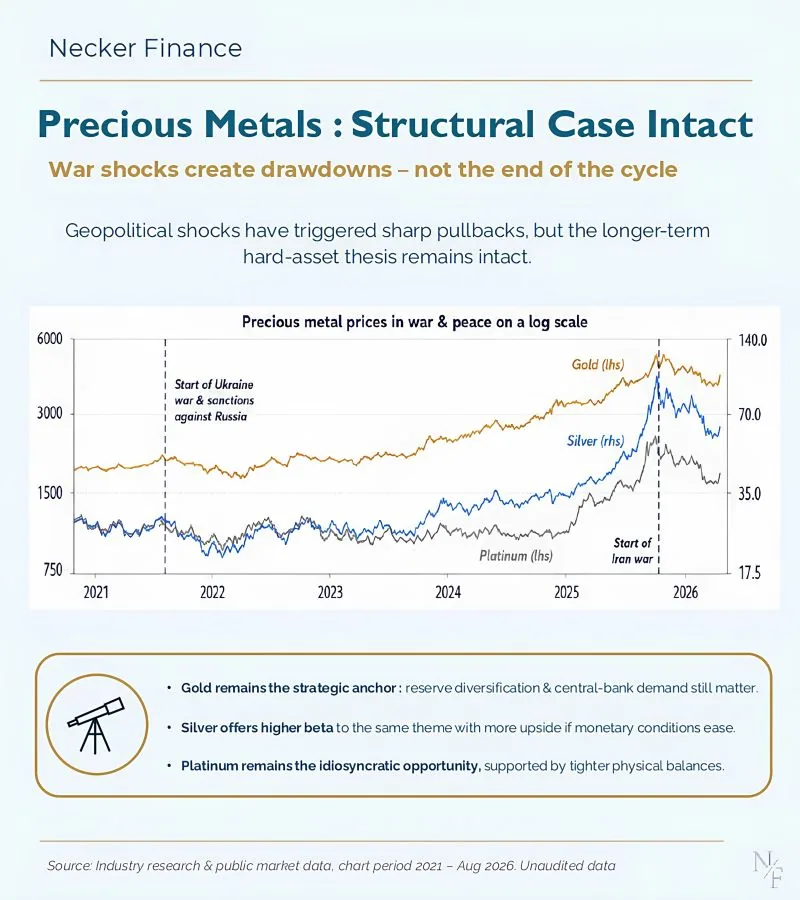
What interests us more is what happens underneath the volatility. Central banks have absorbed a meaningful share of annual mine supply in recent years, while fiscal expansion and reserve diversification continue to support the case for scarce, non-sovereign assets.
That leads us to a differentiated view across the complex: Gold remains the strategic allocation. Silver offers more upside sensitivity if monetary conditions ease. Platinum is the more idiosyncratic opportunity, driven by tighter physical balances.
The important question is therefore not “will volatility disappear?” but rather: Has the structural reason for owning precious metals changed? For now, we do not think it has.
Further reading

Lac Leman joins Necker Finance Mauritius
Necker Finance Mauritius now holds the entire share capital of Lac Leman Investment Management Ltd, completing a step that began with a minority interest a year earlier.
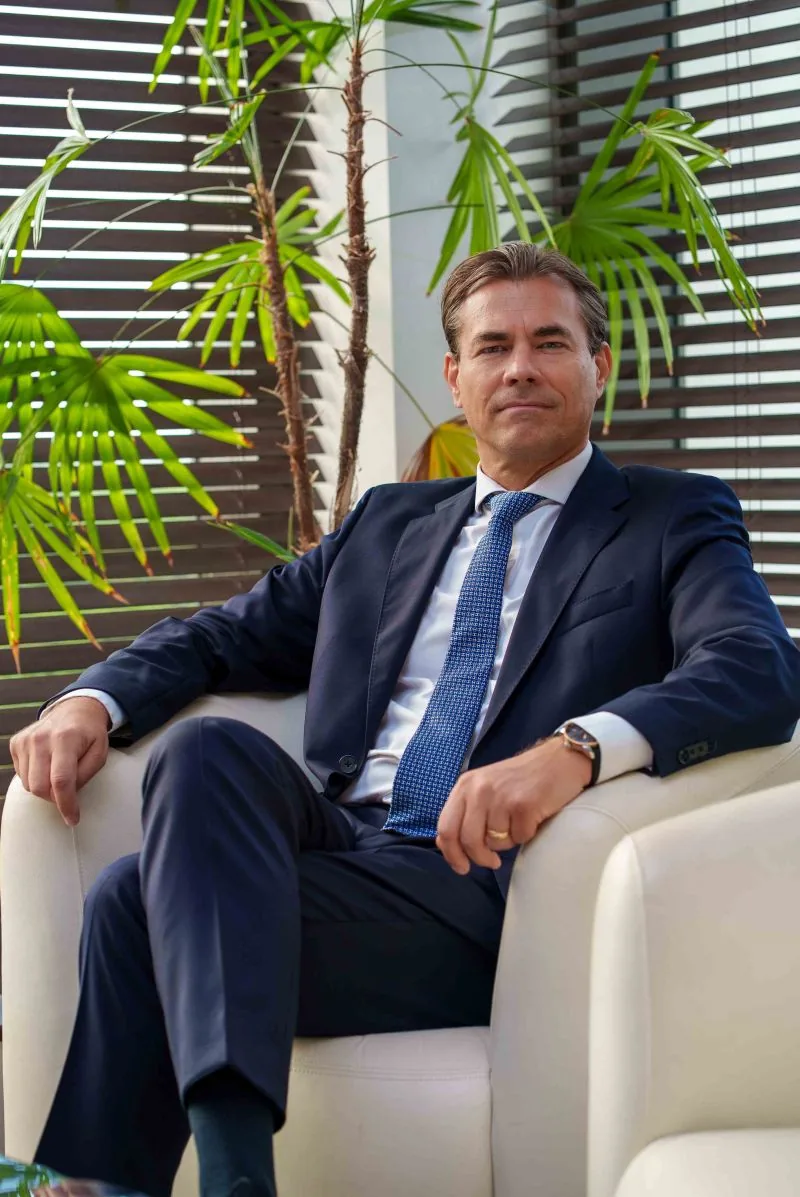
Guillaume Passebecq appointed CEO of Necker Finance Mauritius
Necker Finance Mauritius appoints Guillaume Passebecq, a private banking leader with more than thirty years of experience, as Chief Executive Officer.